Local SEO Checklist 2026 – Rank in Nearby Search
How can I make my business show up first when customers search nearby on Google Maps and Search?
I created this practical local seo checklist to help me win visibility and drive real results in 2026. With Google owning nearly 90% of search, I focus on proximity, relevance, and prominence so my business appears where mobile customers look first.
My approach ties the website, profiles, and content to commercial intent keywords and clear service pages. I treat my Google Business Profile as a primary asset, keep hours and photos accurate, and use reviews to build trust that converts browsers into calls and visits.
Over weekly and monthly routines I monitor GBP insights, GA4, and Search Console so I can link traffic to calls and bookings. This short, actionable guide sets the strategy I follow to boost presence, lift visibility, and attract the right customers in India.
What I’m Solving: How I Rank Higher in Nearby Searches Today
I want my business to show up in the exact moment a nearby customer searches for what I sell. My focus is simple: improve proximity, sharpen relevance, and build prominence so my website and profiles earn better results.
I clarify my business model and service areas so both Google and customers instantly know where I operate. I align my profile, pages, and citations with the same NAP and categories to avoid mixed signals.
- I target commercial intent keywords on core pages and make the first paragraph and titles drill down on what I do and where I do it.
- I add clear calls to action—call buttons, WhatsApp links, and directions—so visibility turns into leads and revenue.
- I keep hours, phone numbers, and services accurate and gather steady reviews, posts, photos, and local links to boost prominence and trust.
| Signal | What I do | Impact |
|---|---|---|
| Proximity | Map accuracy and service areas | Shows up for nearby searchers |
| Relevance | Keywords, categories, page intent | Matches customer queries |
| Prominence | Reviews, activity, backlinks | Improves trust and rankings |
I monitor calls, direction requests, and rank changes to repeat what works and refine what doesn’t. This repeatable strategy keeps my presence competitive as others update their profiles and new businesses appear.
How Local SEO Works Now: Proximity, Relevance, Prominence
I focus on three simple signals that decide who shows up in maps and mobile search. Google’s local algorithm weighs distance, how well a listing matches intent, and authority signals from activity and links. In dense Indian cities, small differences in pin placement or page clarity change who a customer finds first.
Why distance matters most on mobile and Google Maps
Proximity is amplified on phones and in google maps. I verify my pin and address so my business appears for truly nearby queries. Even a meter or two can affect my visibility in metros with many similar businesses.
Boosting relevance with exact categories and pages
I choose the most accurate primary category and map each service to a focused page. Clear titles, intent-matching copy, and the right keywords help search engines and customers see that my page answers their query.
Prominence signals that build trust
- I earn and respond to reviews and collect consistent citations with the same NAP.
- I pursue local backlinks from community sites and keep my profile activity fresh.
- Regular updates, updated hours, and photos keep my business credible over time.
Choosing My Setup: Single Location, Multi-Location, or Service Area
Picking the right setup—one storefront, multiple branches, or a service-area model—sets how I verify listings, build pages, and collect reviews. My choice also decides whether I show a visible address or list service zones instead.

What changes in my approach based on business type
For a single physical location, I keep one verified google business profile with a precise pin, a unique phone number, and a location page on my website that mirrors the same information.
When I run multiple locations, I create one profile per address. Each gets its own landing page, phone number, photos, and review funnel so every branch builds local prominence.
As a service-area business, I may hide my address and list service areas. If I operate several SABs, I avoid overlapping zones to prevent filtering and to keep each location visible.
| Setup | Verification | Contact | Site pages |
|---|---|---|---|
| Single storefront | One GBP verified | Unique phone number | One location page |
| Multiple branches | Separate GBP per address | Separate numbers per branch | City-specific landing pages |
| Service-area business | Verify primary listing; hide address if needed | Phone number per service area | Service pages and hub linking |
Google Business Profile: My Most Visible Local Asset
My Google Business Profile is the single place I control how customers first meet my business online. I claim or add my listing, finish verification, and place the pin exactly where my address sits on Google Maps so directions and distance work right.
I pick one accurate primary category and add secondary categories that match my services. I keep my business description short and useful, and I set hours, split shifts, and holiday hours so people see correct information before they call.
What I update and how often
- I add services and attributes that match how customers search and link each listing to the best page on my website.
- I upload photos, short videos, and seed Q&A with common answers to reduce friction for customers.
- I post weekly updates, offers, and event notes so my profile stays active and drives clicks and direction requests.
- I monitor suggested edits and reviews weekly and use a shared calendar to keep posting and audits consistent.
| Element | Action | Impact |
|---|---|---|
| Verification & Pin | Claim listing, verify, set pin precisely | Maps accuracy and eligibility for map pack |
| Categories & Description | Choose exact primary + relevant secondaries; write concise info | Better match to customer intent |
| Media & Posts | Photos, videos, weekly posts, Q&A | Higher engagement and visibility |
| Monitoring | Weekly suggested edits and review checks | Prevents misinformation and builds trust |
Reviews That Move the Needle: Getting, Responding, Improving
I rely on genuine feedback to lift my profile and convert curious searchers into customers. Collecting and replying to reviews is a simple, high-impact strategy I use every week.
Platforms I prioritize
I focus on Google reviews first because they affect my google business profile and Maps results. Next, I expand to niche platforms and trusted directories to broaden reach.
How I request reviews
- I share a direct review link via email and WhatsApp and print a QR code at the counter and on invoices.
- I add a reviews widget on my site so visitors can read and leave feedback without friction.
- I train staff to ask for a review right after a successful service so it feels natural to customers.
Responding and mining insights
I reply fast: thank happy customers and handle negatives with empathy and a solution offline. I also read review themes to find service gaps and new keywords for pages and FAQs.
| Platform | Tactic | Impact |
|---|---|---|
| Direct links + QR | Better map pack visibility | |
| Niche sites | Targeted asks | Industry trust |
| Website | Widget & showcase | Higher conversions |
Local Citations and Business Directories: Building Consistent NAP
I keep one source of truth for my business details so customers and search engines see the same information every time.
I build citations on major maps and business directories—Yelp, Bing, Apple Maps, Trustpilot, Tripadvisor—and on social profiles, industry sites, and local news blogs relevant to my niche.

Where I list my business
- I create and update listings on major maps and directories and on industry or community sites that matter to my customers.
- I match my website footer and Google Business Profile exactly, using the same business name, address, and phone number everywhere.
- I add hours, photos, consistent descriptions, categories, and a clear link to the most relevant landing page.
Cleaning duplicates and staying synced
I audit for duplicate or outdated listings, request merges or removals, and correct user-suggested edits quickly.
I keep a master spreadsheet of all listings, logins, and update dates. I use UTM tags on key directory links and set quarterly reminders to check and refresh entries.
Local Backlinks That Prove I’m a Trusted Neighbor
Earning credible backlinks shows search engines that my business is active and trusted in the community.
I plan community events, sponsor teams, and run charity drives so organizers and local media will link to my site. I also offer real testimonials to suppliers and ask for a link on their case study pages.
I pitch stories to reporters and bloggers about hiring, product launches, or community work that matter to readers. I search for unlinked mentions and ask politely for a link when it helps readers find my site.
Safe link building strategy
- I avoid paid networks, link schemes, and irrelevant directories that risk penalties.
- I focus on a few high-value platforms and measure referral traffic and assisted conversions to prove results.
- I keep outreach personal and helpful so relationships lead to repeat links over time.
| Outreach Tactic | Typical Link Type | Expected Impact |
|---|---|---|
| Event sponsorships | Directory/event page link | Local visibility and referral visits |
| Testimonials & supplier case studies | Contextual backlink | Relevant authority and trust |
| Press and blogger outreach | Editorial link | Traffic spikes and better rankings |
My Website Foundation: NAP, Location Pages, Services, and Navigation
A strong website foundation starts with precise contact info, meaningful service pages, and simple navigation. I make sure every visitor sees the same facts I show on my Google Business Profile.
Footers and Visit Us page
I add my full NAP in the footer of every page using the exact formatting from my GBP and citations. I create a Visit Us page with address, phone number, hours, photos, and an embedded map so visitors recognise the storefront.
Location and service pages
For each location I build a unique location page that maps to its GBP and links from a Locations hub. Service pages explain scope, pricing ranges, process, FAQs, and proof—no thin gateway pages.
URLs, navigation, and links
I keep URLs short and descriptive and standardize headings for readability on mobile. I use internal links to guide users and measure which pages drive calls and direction clicks so I can improve CTAs and content.
| Element | What I do | Why it matters | Measure |
|---|---|---|---|
| Footer NAP | Exact name, address, phone number | Consistency across site and citations | Match rate vs. GBP |
| Visit Us page | Map, hours, photos, contact form | Makes visits and calls easier | Direction requests & form submissions |
| Location & service pages | Unique pages with real information and links | Improves relevance and user trust | Calls, bookings, and page conversions |
On-Page SEO That Targets Local Intent
I base on-the-page choices on real search data so my content matches what customers type. I use Google Search Console, autocomplete, related searches, and keyword tools to find commercial and “near-me” phrases that matter in my city.
I choose one primary keyword per page and place it in the title, H1, meta description, URL slug, and the first paragraph. I use natural variations in subheads and body copy so the page reads well for humans and signals relevance to search engines.
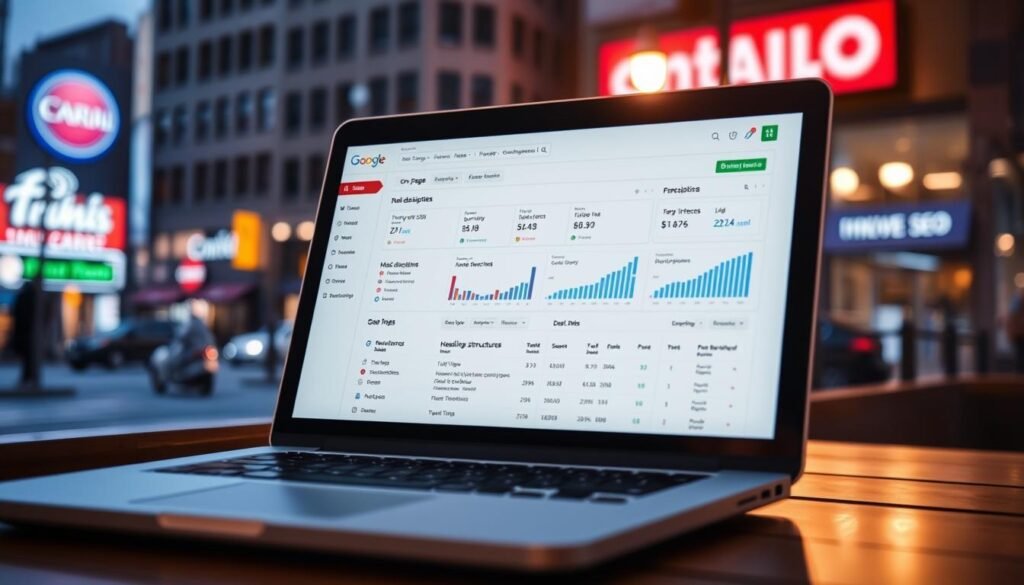
Image and content hygiene
I save images with descriptive filenames and alt text that include the service and city when relevant. I add photos of the shop, nearby landmarks, and team to build trust and improve visual relevance.
- I keep CTAs near the top for mobile clicks and calls.
- I create small comparison blocks so visitors self-select the right service.
- I audit JavaScript content to ensure key text is renderable or pre‑rendered for crawlers.
| On-page task | What I do | Impact |
|---|---|---|
| Keyword placement | Title, H1, meta, URL, first paragraph | Clear relevance for search engines and users |
| Images | Descriptive filenames + alt text + local photos | Better image search visibility and trust |
| Content & JS | Readable headings, minimal JS blocking | Improved crawlability and AI summaries |
Structured Data: LocalBusiness, Services, Reviews, and FAQs
JSON-LD helps me tell search engines who I am, what I sell, and when I’m open.
I add LocalBusiness structured data on my contact or location page with required name and address. I include optional fields like openingHours, telephone, and sameAs links to strengthen entity signals across search engines. I also place Service or Product schema on core service pages so offerings and price ranges are clear.
I mark up genuine on-page reviews with Review schema and add FAQPage schema to pages that have clear Q&A. I avoid marking up content that isn’t visible to users to stay within guidelines.
I validate every change with Google’s Rich Results Test and rerun checks after template edits or CMS updates. I test quarterly and keep a documented schema strategy so future edits keep data accurate.
| Schema type | Where I add it | Why it matters |
|---|---|---|
| LocalBusiness (JSON-LD) | Contact/Visit page | Provides core identity and maps eligibility |
| Service/Product | Service pages | Clarifies offerings and pricing for rich snippets |
| Review & FAQPage | Pages with reviews or Q&A | Improves visibility and conversational answers |
Technical SEO Audit I Run Regularly
I run a tight technical audit each month to keep my website healthy and visible in search results. I focus on crawlability, performance, and any issues that stop pages from appearing in engines.
First, I use Google Search Console to check indexing, sitemaps, and any Manual Actions or security flags. I confirm important pages are indexed and fix crawl errors or soft 404s fast.
Core checks I perform
- I monitor Core Web Vitals and prioritize fixes for slow, mobile‑heavy pages to improve user experience and results.
- I enforce HTTPS across the site, clear mixed‑content warnings, and verify Security and Manual Actions reports are clean.
- I audit JavaScript rendering; when content depends on JS, I use server-side rendering or pre‑rendering so search engines can read key data.
- I apply canonical tags to prevent duplicate content and streamline internal linking so important pages are reachable within a few clicks.
- I review robots.txt and meta robots to ensure I’m not blocking pages I want indexed.
| Check | Where I look | Expected impact |
|---|---|---|
| Indexing & sitemaps | Google Search Console | Pages indexed and visible in search |
| Performance | Core Web Vitals report | Better mobile speed & engagement |
| Rendering & duplicates | Server logs / URL inspection | Cleaner index and fewer crawl waste |
I schedule audits monthly and after major site changes. I track technical fixes against performance metrics so I can prove impact and plan the next round of work.
Content That Wins in Organic, Maps, and AI Overviews
I build content that maps questions to services so searchers find clear next steps. AI overviews and assistants favour structured, authoritative answers. I make pages that serve both people and machines.

Balancing informational, transactional, commercial, and navigational content
I map content to the customer journey: how-to blogs for research, service pages for transactions, brand pages for navigation, and offers for commercial intent.
Optimizing for conversational and voice queries with Q&A sections
I add concise Q&A blocks and FAQs on key pages so voice assistants and LLMs can pull exact answers. Short, direct Q&A boosts the chance of appearing in AI summaries and featured snippets.
Distributing content via social, YouTube, and local platforms
- I repurpose blog insights into short-form videos for YouTube Shorts, Instagram Reels, and TikTok.
- I localize posts with neighbourhood names, landmarks, and community events to increase Maps relevance and presence.
- I track which pieces earn impressions in AI overviews and refine headings and answers for clarity.
| Content Type | Main Goal | Primary Platform |
|---|---|---|
| Informational blog | Research & trust | Website & social |
| Transactional page | Conversions | Website & maps |
| Short video | Awareness & visibility | YouTube, Instagram, TikTok |
Tracking What Matters: Maps Visibility, Rankings, and Conversions
My focus is on actionable metrics that link maps visibility to real business outcomes. I track a few clear signals so I can repeat wins and fix drops quickly.
Google Business Profile insights: views, calls, direction requests
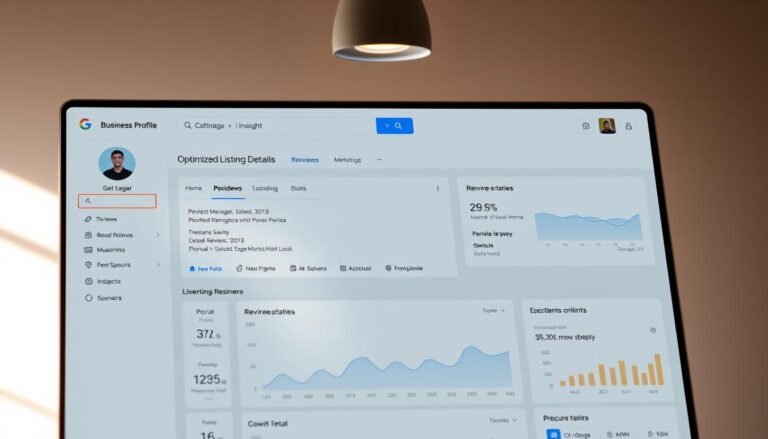
I check my google business profile insights weekly to see profile views, clicks to call, and direction requests. These numbers tell me which hours and days spike and where to push posts or offers.
Map rank tracking and position monitoring for target keywords
I track Maps rankings by grid or radius for my target keywords across neighbourhoods. This shows hyperlocal performance and highlights where competitors beat me.
GA4 and Search Console to connect traffic with outcomes
In GA4 I map events—calls, WhatsApp taps, form submissions—to traffic sources so I know which channels convert best. In Search Console I watch impressions, clicks, and average position for queries and pages that should drive visits.
- I tag GBP and directory links with UTM parameters so analytics shows platform impact precisely.
- I benchmark competitor visibility and note category or content changes that shift rankings.
- I combine GBP insights, GSC, GA4, and rank data into a monthly dashboard for one view of performance.
| Source | Key Metrics | Why I Watch |
|---|---|---|
| Google Business Profile | Views, calls, directions | Direct map engagement and peak times |
| GA4 | Events, conversions, source | Which channels drive actions on my website |
| Search Console | Impressions, clicks, position | Which queries need better titles or content |
I set monthly goals for calls, direction requests, and conversions. When trends dip I tweak categories, posts, or page content and watch results. These data-driven changes inform my content calendar and seasonal campaigns so visibility produces measurable results.
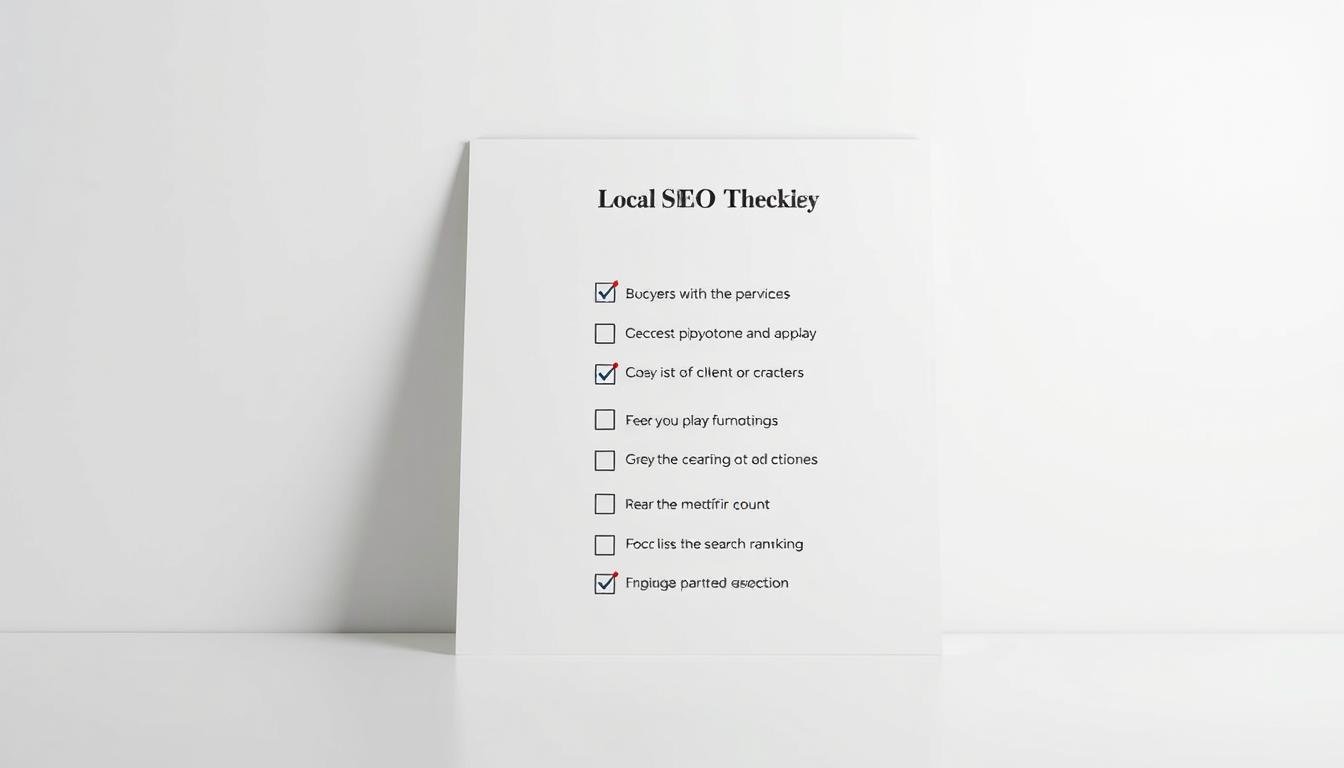
My Local SEO Checklist for 2026
I follow a steady rhythm of tasks so my business stays visible and converts more searches into visits. This cadence keeps my website, profile, and content aligned with what customers need today.
Weekly: quick checks that prevent drops
Each week I post an update or offer, add a fresh photo, and reply to every new review. I also verify hours, phone, and category accuracy across my profile and top directories.
I scan key pages for broken links, typos, and form issues so conversion paths stay clear.
Monthly: sync citations and grow links
Monthly I sync citations, remove duplicates, and correct NAP inconsistencies. I run backlink outreach to partners and follow up on unlinked mentions.
I refresh one or two pages—update FAQs, add images, and refine titles to lift CTR.
Quarterly: deep audits and strategy tune-ups
Every quarter I run a full technical audit via GSC: indexing, Core Web Vitals, HTTPS, sitemaps, JS rendering, and canonicals. I review categories and services, check keyword gaps, and set new targets.
I finish by aligning analytics dashboards with my roadmap so I focus on actions that drive calls and visits.
| Cadence | Main Action | Impact |
|---|---|---|
| Weekly | GBP posts, replies, quick page checks | Maintains visibility and trust |
| Monthly | Citation sync, outreach, page refresh | Improves presence and links |
| Quarterly | Technical audit, category tune-ups | Fixes issues and guides strategy |
Competitor Insights: Learning from Who Ranks Above Me
Watching competitors in search results reveals practical gaps I can close fast. I identify true online rivals by who appears in maps, organic pages, and AI summaries for my target keywords.
What I compare
I review their google business profile categories, photos, post cadence, and service list. I note how they frame intent and convert clicks into calls or visits.
- I count reviews, track recent activity, and check average ratings and response style.
- I benchmark content depth—service pages, FAQs, visuals, and city mentions—against my website.
- I use backlink tools to see which local sites, media, or associations link to them and add those links to my outreach list.
- I log unique offers, CTAs, and technical edges like faster pages or clearer navigation.
- I set goals: match review velocity, add missing categories, and win three new local links this quarter.
| Audit Area | What I check | Action |
|---|---|---|
| GBP & profile | Categories, photos, posts | Adjust my categories and post cadence |
| Reviews & ratings | Volume, velocity, responses | Improve request flow and reply faster |
| Content & technical | Depth, FAQs, speed | Enhance pages and fix UX issues |
| Backlinks & links | Referrers and local mentions | Outreach to media and partners |
Conclusion
The final step is a repeatable process that turns visibility into visits and calls. I use a simple local seo checklist that keeps my Google Business Profile sharp, my NAP consistent, and my website fast and focused on city-specific services.
I build honest backlinks, add structured data so AI and search understand my services, and keep content clear for customers. I track GBP insights, GA4, and Search Console to measure page clicks, calls, and directions and then act on the data.
I follow weekly, monthly, and quarterly routines, learn from competitors and feedback, and avoid shortcuts that risk long-term trust. With this local seo checklist, I expect steady presence gains and measurable results through 2026.