
Common Local SEO Mistakes to Avoid in 2026
Can a single missing phone number or a stale Google Business Profile strip hours of footfall from your shop?
I ask this because mobile-driven search drives visits and sales. Google found 76% of phone searchers visit a related business within a day and 28% convert. Those stats show why I focus on local seo, not just broad seo.
In India, proximity and convenience steer choices. Yet in 2025 only 40% of SMBs had websites and 35% used GBP. That inactivity is the biggest local seo mistakes I still see.
I will walk you through quick fixes that lift visibility and brand trust. I cover website basics, category selection, reviews, hyper-local content, images and Core Web Vitals. My aim is simple: help your business win map pack and organic results with clear, practical checklists.
Why Local Search Still Matters in 2026 for Indian Businesses
Most buyers near you act fast after a quick phone search — that urgency shapes how I work. Google found 76% of mobile searchers visit a business within a day and 28% make a purchase, so proximity and intent drive outcomes for many Indian businesses.
What “local” really means today: proximity, relevance, and intent
I define local for India as the overlap of proximity, relevance, and clear buyer intent. People nearby search for services on mobile and expect instant answers on availability, price, and contact paths.
How I align my approach with customer behavior
I segment my audience by neighborhood and pin-code clusters, then shape site structure and service pages to match those patterns. Proximity bias matters: where your business sits affects map-pack visibility and whether Google filters similar nearby listings.
- I build content around tasks and questions your customers ask.
- I make tap-to-call, WhatsApp, and local CTAs prominent to reduce friction for potential customers.
- I reflect regional terms and colloquialisms when they improve relevance without confusing the audience.
Mapping demand to precise service areas helps your search exposure match where the business truly operates. That improves both relevance and conversion, and it guides whether to scale or open new branches.
The Biggest Foundation Gap: No Website or Unclaimed Google Business Profile
Many owners underestimate how much visibility a simple website and a claimed business profile unlock. A 2025 survey of 778 SMBs found only 40% had a website and 35% had a Google Business Profile. That inactivity is the single biggest gap I see when I audit small businesses in India.
Claiming and verifying without triggering suspension
I sign in with a business email, create or claim the profile, set an address or pin, list up to 20 service areas, add contact info, and verify. I avoid risky edits right after verification or an unsuspension because changes can prompt re-verification or suspension.
I read appeal screens carefully and collect evidence before I respond. That process saves time and improves reinstatement results.
Building a simple, fast website that complements my GBP
I build a lightweight site that mirrors my profile: same name, address, phone, and hours. I embed a Google Map, add clear contact CTAs, and include service pages and FAQs so customers get depth beyond the map listing.
| Asset | Primary Role | Top Benefit |
|---|---|---|
| Google Business | Discovery in Maps | Instant taps and directions |
| Website | Service detail & trust | Conversions via contact and info |
| Both together | Entity confirmation | Stronger local search results |
local seo mistakes I see every week (and how I fix them)
I find two types of errors that knock visibility down fast: things owners omit, and risky moves they take. I sort errors into omissions and commissions so fixes are clear and measurable.
Mistakes of omission vs. commission: what costs rankings fastest
Omissions are missing essentials: no website, an unclaimed GBP, or no review responses. These make a business invisible and reduce trust.
Commissions are active errors: wrong categories, immediate edits after verification, and thin visuals that look generic. These can trigger filtering or lower rankings, especially near a strong competitor.
| Error type | Common examples | Fix I deploy |
|---|---|---|
| Omission | No website, unclaimed profile, unanswered reviews | Launch a lightweight site, claim profile, start review responses |
| Commission | Wrong primary category, risky post-verification edits | Correct primary category first; pause big edits for a week |
| Visuals & benchmarking | Generic photos; no competitor checks | Replace with real photos/videos; benchmark one competitor weekly |
I fix miscategorization first because surveys show it hurts rankings most. After each change I re-check positions so I know what moved the needle. Finally, make sure you track one nearby competitor to learn fast and act cleanly.
GBP Setup Pitfalls: Wrong Categories, Sparse Info, and Weak Visuals
A mismatched category or bland gallery can quietly erase your best chances in map results. I focus on tidy profiles and real visuals because small edits change who finds and trusts your business.
I pick one precise primary category and stack up to nine relevant secondary categories. Google allows one primary and up to nine additional categories, so vague labels cost impressions and clicks.

Choosing primary and secondary categories like a pro
I compare my category choices with top competitors to spot gaps. Then I add only legitimate secondary categories that match services and keywords. I set a quarterly reminder to revisit categories as Google updates them.
Uploading real photos and short videos that boost visibility
I upload a steady stream of real images and short videos: storefront, staff, before/after, and on-site work. Stock photography underperforms; when budget allows, I hire a pro photographer to lift my content.
Avoiding risky edits right after verification or an unsuspension
I never rush big changes after verification or an unsuspension. Immediate edits often trigger re-verification or suspension, so I plan stable updates and expand gradually to protect results.
| Element | Risk of getting it wrong | Quick fix I use |
|---|---|---|
| Primary category | Low relevance, fewer impressions | Pick the most specific available option |
| Secondary categories | Missed service queries | Match competitor stacking and add genuine services |
| Images & videos | Low trust, poor clicks | Upload real photos weekly; prefer pro shoots |
NAPW and Directory Hygiene: Consistency Beats Confusion
Consistent contact details across sites stop confusion for customers and search systems alike.
I standardize my business name, address, phone, and website everywhere to build trust and make verification smoother for Google Business. I keep the format identical on the site, citation listings, and profiles.
Standardizing name, address, phone, and website across the web
I use a spreadsheet to track each directory and the exact NAPW string I publish. That process helps me spot typos, different abbreviations, or swapped numbers quickly.
Eliminating duplicate listings and messy citations
I remove or merge duplicate entries and assign a unique number per location or practitioner. I avoid PO Boxes or unstaffed virtual offices because those models risk profile penalties.
- I define realistic service areas and avoid overlapping areas between nearby locations.
- I log every change so signals stay consistent across the site and directories.
- I verify eligibility before creating new listings to prevent future suspensions.
| Action | Risk if ignored | Outcome I aim for |
|---|---|---|
| Standardize NAPW on site and directories | Confused customers; failed verification | Clear signals; higher trust and stable rankings |
| Remove duplicates and keep unique numbers | Fragmented citations; lost calls | Consolidated authority; accurate reporting |
| Document changes and check eligibility | Suspensions or penalties for ineligible models | Clean profiles and predictable listing health |
Reviews and Reputation: The Silent Growth Engine Most Owners Ignore
Reviews shape how new customers see your business long before they call.
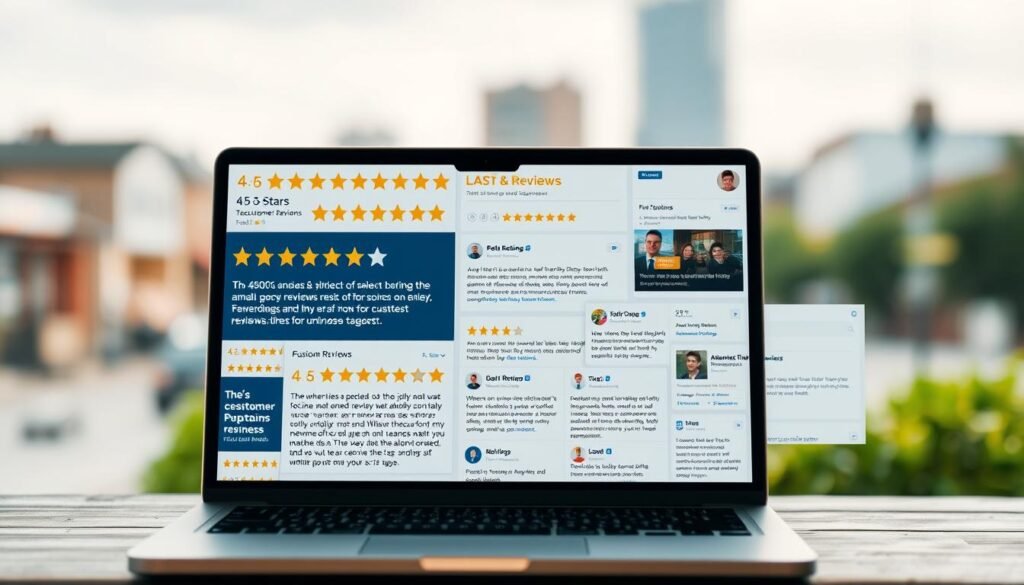
I follow clear rules when I handle feedback. John Mueller confirmed ratings influence local results, and star ratings began showing in organic snippets in 2021. The 2025 Local Consumer Review Survey found 89% of consumers prefer businesses that reply to both praise and complaints.
My playbook for responding to negative and positive feedback
I reply to every review, especially negative ones, with empathy and a clear path to resolve the issue. I avoid copy‑paste replies or defensive tones.
I cool off before replying to heated posts. A calm, specific response often turns a critic into a repeat customer and shows others my brand cares.
Ethical ways I earn more detailed, recent reviews
- I ask happy customers after service completion to write about specific outcomes. That timing gets real, useful feedback.
- I avoid incentives that break platform rules. Instead, I send a direct link via SMS, WhatsApp, or email to make leaving reviews simple.
- I report fake reviews through the proper channels and use social media sparingly to clarify my response when public context helps.
- I analyze review themes to fix operations; those fixes boost trust and organic rankings over time.
| Action | Why I do it | Immediate benefit |
|---|---|---|
| Reply to every review | Shows responsiveness and builds trust | Higher click-throughs and repeat visits |
| Request detailed reviews after service | Generates useful keywords and specifics | Better conversions and clearer expectations |
| Report fakes and use social posts carefully | Protects rating integrity | Cleaner profile and higher trust |
Content and Keywords: Go Hyper-Local or Get Overlooked
Targeted city pages win when they answer specific questions people actually search for on their phones. I focus my content on real problems, nearby landmarks, and service details that matter to Indian customers.
I do lightweight keyword research using tools like Google Trends to compare interest across metros and neighbourhoods. Then I map those keywords into titles, headers, and internal links on my website so pages match intent and terminology people use when they search.
Localizing pages and content for cities and service areas
I build content hubs for metros and pin-code clusters, adding photos, FAQs, and specific examples so each page stands alone. I write like a neighbour: using local phrases and answering common questions to boost engagement.
Structuring service and location pages with schema
I add organization, service, and localBusiness schema so search engines extract entities and show richer results. I avoid thin doorway pages and make sure each service or location page has unique text, images, and contact details.
- I align keywords to each page after doing quick keyword research.
- I link service pages to city pages to help users and bots navigate.
- I test which phrases drive calls and iterate content monthly.
Technical and UX Traps: Mobile, Images, Speed, and Cannibalized URLs
Slow pages and sloppy images turn curious visitors into lost leads before they can tap a contact button. I focus on technical fixes that keep the site quick and the user experience simple on common Indian phones.

Optimizing images, Core Web Vitals, and mobile-first experiences
I audit every image, compress aggressively, and write descriptive alt text so the website loads fast and stays accessible. Large files and missing alt tags hurt Core Web Vitals and engine optimization.
I prioritize mobile-first layouts, streamline scripts, and test forms on mid-range devices. A smooth experience reduces bounce and raises conversions.
Preventing multiple URLs from competing with canonicals
I find duplicate URLs and add canonical tags or consolidate pages so the search engine knows which address to rank. That prevents cannibalization and fixes conflicting signals.
- I fix broken links and forms and test tap targets on real phones.
- I keep media filenames and structured data aligned with page topics.
- I recheck metrics after each change to tie improvements to calls and conversions.
| Issue | Quick fix I use | Benefit |
|---|---|---|
| Oversized images | Compress and serve next‑gen formats | Faster load times |
| Fragmented URLs | Canonicalize or merge content | Clearer ranking signals |
| Poor mobile layout | Mobile-first redesign and testing | Better user experience and conversions |
Competitor Reality Check and Ongoing Tracking
I start by mapping the businesses that beat me on search and unpack every visible signal. That quick scan shows category choices, review patterns, image types, and content depth I need to match or outdo.
How I analyze top rivals’ GBPs and websites
I inspect primary and secondary categories in each google business profile to spot miscategorization advantages. I count review volume, check recency, and note whether the competitor replies fast.
I also catalog image variety—team, storefront, service shots—and post cadence. On sites, I audit hyper-local pages, internal links, and structured data so I can build better, not copy.
Monitoring visibility by neighbourhood
I use tools and occasional drive-around checks to measure rankings by neighbourhood grid. Whitespark’s Local Rank Tracker scales this so I see street-by-street shifts.
- I shortlist competitors outranking me and reverse-engineer category stacks.
- I compare review depth and response habits to learn what wins trust.
- I track each core change with rank checks to learn what truly moves the needle.
| Focus | What I track | Why it matters |
|---|---|---|
| GBP categories | Primary & secondary choice | Mislabelled categories often cost rankings |
| Reviews & responses | Volume, recency, replies | Correlates with trust and clicks |
| Site audit | Hyper-local pages, schema | Shows content gaps to exploit |
| Tracking | Neighborhood grids, tools | Measures impact street by street |
After every change I monitor results and refine tactics. I make sure each test is measured, so my research turns into steady gains in local search and seo performance.
Conclusion
Fixing fundamentals first makes future growth easier and protects your brand’s traffic. Start with a working website and a claimed business profile, then set the right category and keep your name, address, phone, and site consistent.
Correct the most damaging errors—miscategorization, long inactivity, and ignoring reviews—to lift rankings and regain visibility. Build hyper-local content with proper schema, authentic images, and clear keywords so pages help real customers decide quickly.
Keep technical hygiene: speed up pages, compress images, and canonicalize duplicate URLs. Track neighbourhood grids, watch competitors, and measure results with simple tools.
Plan, implement, measure, iterate. That steady process protects your brand and turns small fixes into lasting marketing gains for businesses across India.